
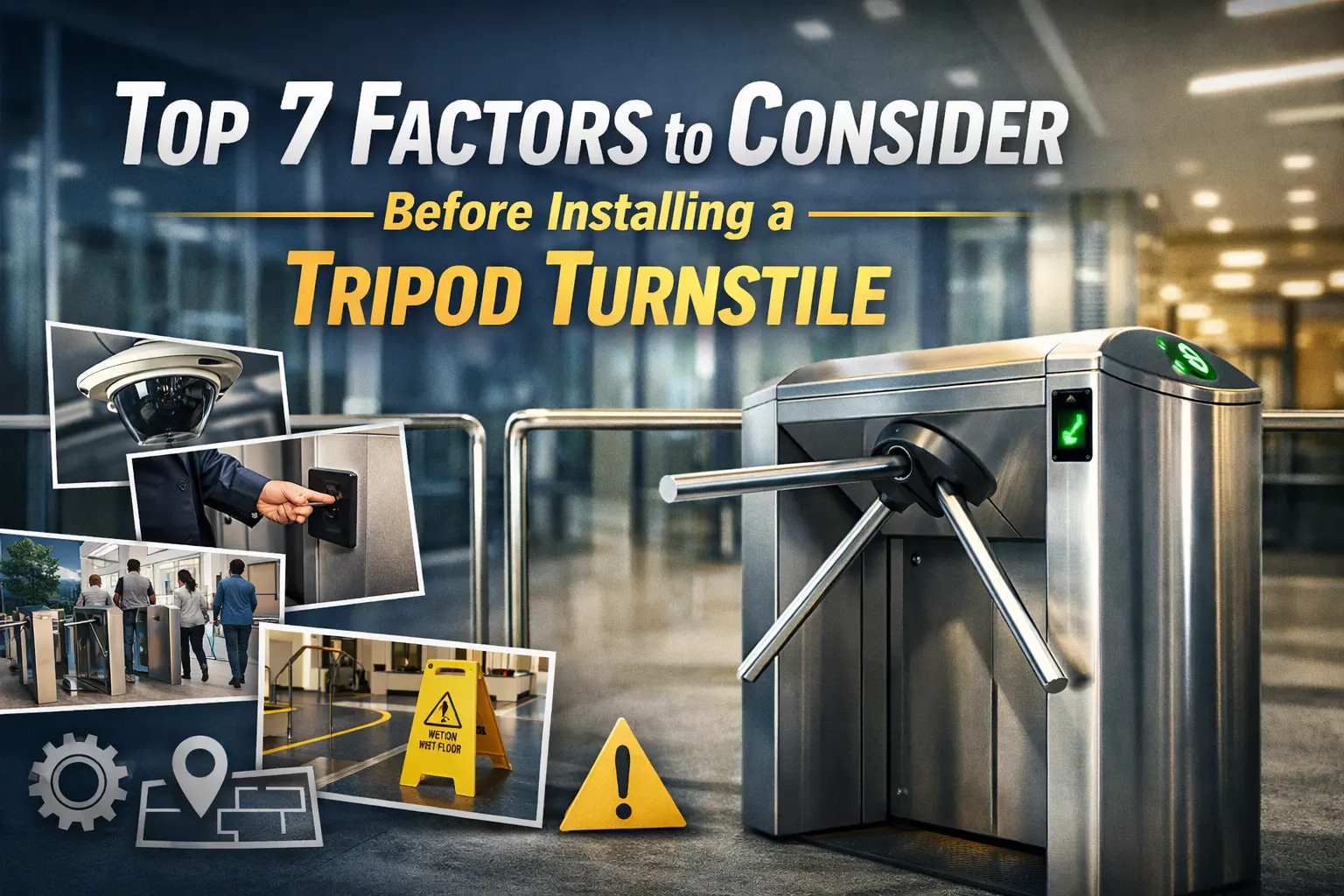
Installing a tripod turnstile is one of the most practical investments a facility manager or security professional can make. Whether you’re securing a factory floor, a gym, a transit hub, or a corporate office, the right turnstile can dramatically improve access control, reduce unauthorized entry, and streamline foot traffic flow. But with so many options available on the market today, making the wrong choice can result in costly replacements, security gaps, or frustrated users.
Before you invest, it’s worth slowing down and asking the right questions. This guide walks you through the top 7 factors to consider before installing a tripod turnstile — giving you the knowledge to make a confident, well-informed decision.
1. Understand Your Foot Traffic Volume
The first and arguably most important factor is understanding the volume of people who will pass through the turnstile on a daily basis. Tripod turnstiles are available in different mechanical grades, and not every unit is built to handle the same throughput.
A light-duty tripod turnstile may work perfectly for a small office building with 50 employees coming and going during business hours. However, placing that same unit at the entrance of a busy metro station or a large manufacturing plant with shift changes involving hundreds of workers would lead to mechanical wear, frequent breakdowns, and bottlenecks during peak hours.
Look for turnstiles rated for heavy-duty or industrial use if your facility handles more than 500 to 1,000 passes per day. Always check the manufacturer’s rated throughput — typically expressed in passages per hour — and match it realistically to your busiest periods, not just your average traffic.
Pro Tip: Always plan for growth. If your facility is expected to expand in the next two to three years, opt for a unit rated slightly above your current needs.
2. Indoor vs. Outdoor Installation Environment
Not all tripod turnstiles are designed to withstand the same environmental conditions. This is a factor many buyers overlook until they face premature rusting, electronic failures, or mechanical stiffness in cold weather.
For indoor installations, a standard stainless steel housing with basic IP ratings is typically sufficient. Indoor environments are controlled, free from direct rain, extreme temperature swings, and UV exposure.
For outdoor installations, you need a turnstile specifically engineered for harsh conditions. Look for:
- IP54 or higher weatherproof rating to protect against dust and rain
- Marine-grade or 304/316 stainless steel construction to resist corrosion
- Temperature-rated electronics capable of functioning in extreme heat or cold
- UV-resistant coatings if the unit will be exposed to direct sunlight for extended periods
Failing to match the turnstile grade to the environment is one of the most common — and most expensive — installation mistakes.
3. Integration with Access Control Systems
A tripod turnstile doesn’t function in isolation. It must communicate seamlessly with your existing or planned access control infrastructure. This integration factor is especially critical as facilities increasingly move toward smart, connected security ecosystems.
Before purchasing, ask yourself:
- What credential technology are you using? RFID cards, QR codes, biometric scanners, mobile access via Bluetooth or NFC? Ensure the turnstile controller supports your credential type.
- Does it integrate with your existing software? Most modern tripod turnstiles support standard Wiegand or RS-485 protocols and can connect to leading access control platforms. Confirm compatibility before signing any purchase order.
- Do you need time and attendance tracking? Many facilities in manufacturing and corporate environments want turnstile data to feed directly into HR or payroll software.
- Is bi-directional access needed? Some installations require separate entry and exit lanes with different credential requirements.
Working with a provider who offers pre-configured integration support — or who can supply the turnstile, reader, and software as a package — saves significant time and reduces technical risk during installation.
4. Safety Features and Compliance Requirements
Safety is non-negotiable in any access control installation. A tripod turnstile that malfunctions or poses a physical hazard can result in injuries, legal liability, and regulatory penalties. Here are the safety features you should always evaluate:
Anti-Panic (Fail-Safe) Mechanism
In the event of a fire alarm or emergency, the turnstile arms must be able to collapse or rotate freely to allow rapid evacuation. Look for automatic fail-safe unlocking that triggers via a dry contact signal from your fire alarm panel or emergency button.
Anti-Tailgating Design
A good tripod turnstile should mechanically prevent two people from passing on a single credential swipe. Look for models with narrow lane configurations and sensor-driven arm locking after one passage.
Arm Material and Injury Prevention
Turnstile arms should be made of high-strength but slightly flexible materials that minimize injury risk if someone walks into them. Avoid overly rigid or sharp-edged arm designs in environments with children, elderly users, or high-speed pedestrian movement.
Compliance Standards
Depending on your region and industry, you may need to comply with specific standards such as EN 17485 (European pedestrian access control), local building codes, or occupational safety regulations. Always verify that your chosen turnstile meets applicable local and international compliance requirements.
5. Power Requirements and Fail-Safe Mode
Understanding the electrical requirements of your tripod turnstile is critical for both day-to-day operation and emergency preparedness.
Standard power supply: Most tripod turnstiles operate on 12V or 24V DC power, often supplied through a dedicated power adapter. Ensure you have the right power infrastructure at the installation point before the unit arrives.
Power consumption: For facilities with many lanes or remote installations, power efficiency matters. Ask for the unit’s standby and active power draw specifications.
UPS/Battery backup: What happens when the power goes out? You have two design philosophies to choose from:
- Fail-safe (Normally Open): The arms automatically unlock during a power failure, allowing free passage. This is preferred in environments where evacuation safety is the top priority.
- Fail-secure (Normally Closed): The arms remain locked during a power failure. This is appropriate for high-security zones where unauthorized access is the greater risk.
Choose the mode that aligns with your facility’s security policy and fire/emergency evacuation plan. Combining a fail-safe turnstile with a UPS (Uninterruptible Power Supply) backup is often the best of both worlds.
6. Build Quality, Materials, and Long-Term Durability
The upfront cost of a tripod turnstile is only part of the total cost of ownership. A cheap unit that requires frequent maintenance, replacement parts, or full replacement after a few years will always end up costing more than a quality unit bought once.
Here’s what to evaluate when assessing build quality:
Materials: Stainless steel (304 grade for indoor, 316 for outdoor or coastal environments) is the industry standard. Avoid units with plastic housings or zinc alloy components in high-traffic or outdoor settings.
Mechanical mechanism: The rotating arm mechanism should use sealed bearings and quality internal springs. Ask the manufacturer for the rated number of cycles (passages) the mechanical system is designed to handle. Quality units are typically rated for 5 to 10 million cycles.
Finish quality: Brushed or mirror-polished stainless steel finishes not only look professional but are more resistant to fingerprints, scratches, and minor corrosion.
Warranty and after-sales support: A manufacturer that stands behind their product will typically offer a minimum one to two year warranty and have local service support or spare parts availability. Always ask about this before purchasing.
At eTradeFia, our tripod turnstile range is built from premium 304 stainless steel with rigorously tested mechanical mechanisms, ensuring long-term reliability for both light commercial and heavy industrial applications.
7. Installation Space, Lane Configuration, and Aesthetics
Last but certainly not least, you need to assess the physical space where the turnstile will be installed. Even the best turnstile in the world becomes a problem if it doesn’t fit your entry layout or disrupts pedestrian flow.
Lane Width: Standard tripod turnstiles have a passage width of approximately 500mm to 600mm. This is suitable for most adult pedestrians. If your facility requires wheelchair accessibility or movement of equipment, you’ll need to supplement with an adjacent ADA-compliant swing gate or a wider flap barrier.
Number of Lanes: Calculate how many lanes you need based on your peak traffic volume and desired throughput. A single lane with 30 passages per minute may not be sufficient for a facility where 200 workers arrive within a 10-minute window.
Mounting Surface: Tripod turnstiles require a flat, stable floor surface for secure mounting. Uneven floors, raised platforms, or anti-fatigue matting near the installation area can complicate installation. Consult with your installer about anchor bolt placement and floor load capacity.
Aesthetics and Brand Alignment: For corporate lobbies, retail environments, or premium fitness facilities, the visual design of the turnstile matters. Sleek, brushed stainless steel units project professionalism. Some manufacturers even offer customization options including color coatings or branded panels.
Cable Management: Plan how power cables and communication cables will be routed — through the floor or along the wall. Poor cable management leads to trip hazards and maintenance headaches later.
Quick Reference: Tripod Turnstile Selection Checklist
| Factor | Key Question to Answer |
|---|---|
| Traffic Volume | How many passages per day at peak hours? |
| Installation Environment | Indoor or outdoor? What climate conditions? |
| Access Control Integration | What credentials and software are already in use? |
| Safety & Compliance | Are anti-panic and anti-tailgate features present? |
| Power & Fail-Safe Mode | What happens during a power outage? |
| Build Quality & Durability | What is the cycle rating and warranty coverage? |
| Space & Configuration | How many lanes are needed? Is ADA access required? |
Final Thoughts
Choosing the right tripod turnstile for your facility isn’t just about picking a product off a shelf — it’s about aligning the right technology with your specific security goals, physical environment, and operational needs. Taking time to evaluate these seven factors before making a purchase decision will save you money, reduce headaches during installation, and ensure the system performs reliably for years to come.
At eTradeFia, we specialize in high-quality access control equipment, including a comprehensive range of tripod turnstiles built for durability, easy integration, and modern aesthetics. Whether you’re outfitting a single entry point or planning a multi-lane installation for a large facility, our team is here to help you find the right solution.
Browse our full range of tripod turnstiles at eTradeFia and get expert guidance tailored to your project requirements.
Have questions about selecting or installing a tripod turnstile? Contact the eTradeFia team today — we’re happy to help you make the right choice.