
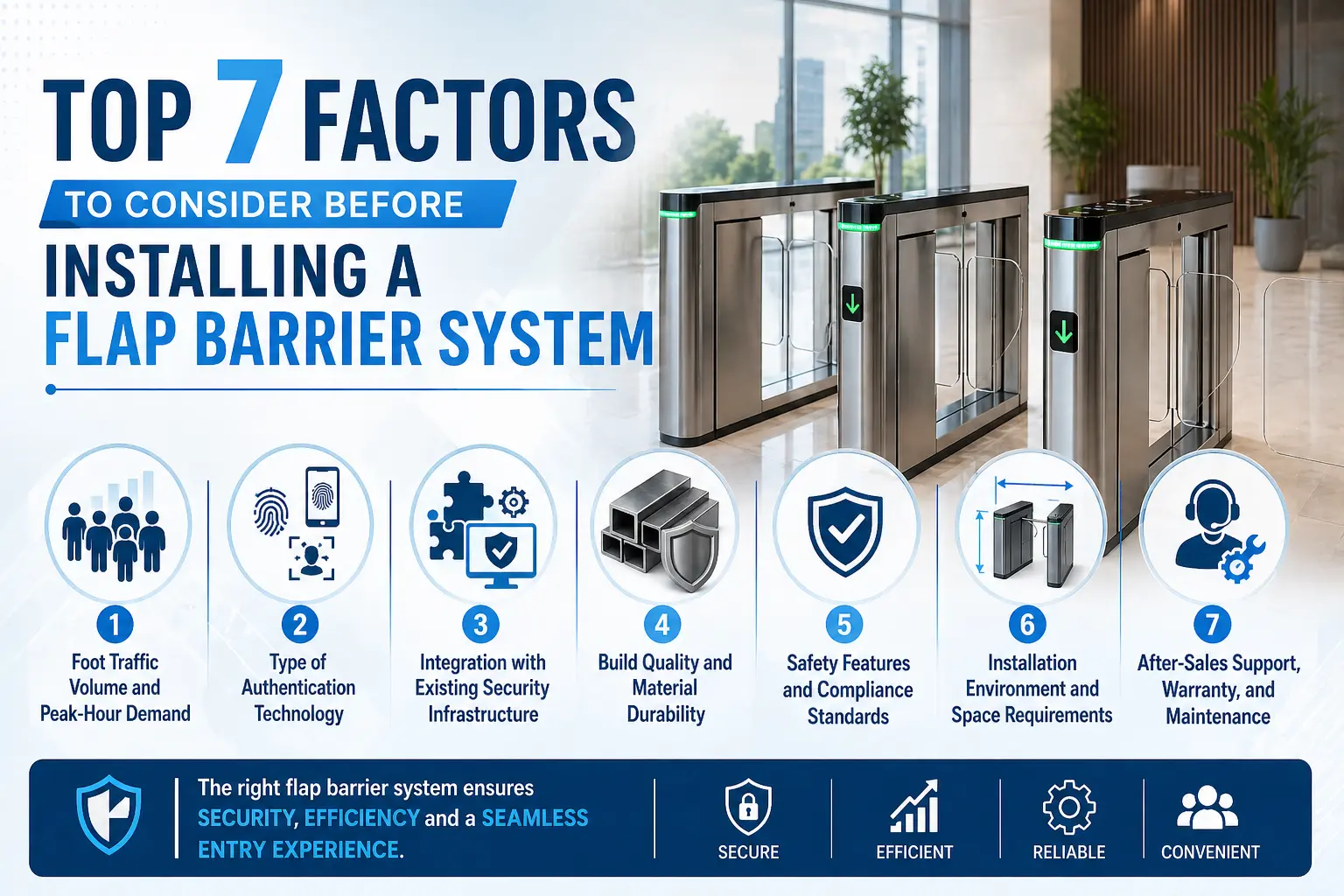
Installing a flap barrier system is a significant investment for any organisation — whether you manage a corporate office, a metro station, a university campus, or a manufacturing facility. The right system can streamline pedestrian flow, eliminate unauthorised access, and give your premises a professional, modern appearance. The wrong one, however, can create bottlenecks, frequent maintenance headaches, and compatibility issues with your existing infrastructure.
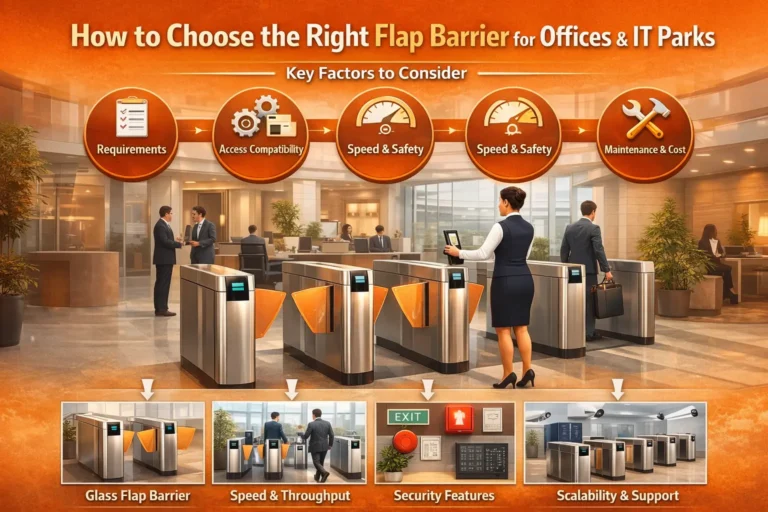
Before you finalise your purchase, it is worth taking a step back and evaluating what your facility truly needs. Here are the seven most important factors every decision-maker should assess before installing a flap barrier gate.
1. Foot Traffic Volume and Peak-Hour Demand
A small office with 50 employees has entirely different requirements from an IT park with 3,000 daily commuters. Standard flap barrier systems can typically process between 25 to 40 users per lane per minute, but this number varies based on motor speed, authentication method, and lane configuration.
Underestimating foot traffic is one of the most common and costly mistakes in access control planning. If the barrier cannot keep pace with rush-hour demand, queues will form — and frustrated users will find ways around the system. Before purchasing, calculate your expected peak throughput and choose a system (or number of lanes) that comfortably handles it with capacity to spare.
Learn more about how to choose the right flap barrier gate for high-traffic environments on our product pages.
2. Type of Authentication Technology
A flap barrier gate is only as smart as the authentication system it is paired with. Modern systems support multiple verification methods, including:
- RFID and smart cards – Fast, contactless, and widely used in corporate environments
- Biometric readers – Fingerprint or facial recognition for high-security zones
- QR code scanners – Ideal for visitor management and event access
- Mobile credentials – App-based access for a fully keycard-free setup
The key is to match the authentication method to your security requirements and user base. A biometric reader adds a layer of security but slightly reduces throughput. An RFID card system is faster but requires card issuance and management. If your organisation already uses an access control platform, verify that the flap barrier system you choose integrates seamlessly with it — or plan for a full upgrade.
3. Integration with Existing Security Infrastructure
A flap barrier does not operate in isolation. In a well-designed security ecosystem, it communicates with your CCTV cameras, visitor management software, alarm systems, and building management platforms.
Before committing to any system, ask your vendor these questions:
- Does the barrier support open-protocol integration (like Wiegand or RS-485)?
- Can it connect to third-party access control software?
- Does it trigger alerts in case of tailgating or forced entry?
Poor integration leads to siloed security — where your barrier records access events that your central system cannot see or act upon. The best pedestrian access control deployments are those where every component works together in real time. At Etradefia, our flap barrier solutions are designed to integrate effortlessly with leading access control platforms, making your security ecosystem stronger as a whole.
4. Build Quality and Material Durability
Not all flap barriers are built to the same standard. The cabinet material, flap construction, and internal motor mechanism determine how well the system holds up over years of heavy use.
Cabinet material: Most quality systems use 304-grade stainless steel for indoor installations. If your site is semi-outdoor or in a coastal or industrial environment, 316-grade stainless steel offers superior corrosion resistance.
Flap material: Tempered glass flaps look premium and are scratch-resistant, while acrylic flaps are lighter and more affordable. Both have their place depending on the environment and budget.
Motor quality: DC brushless motors are the preferred choice for high-usage installations — they operate quietly, require less maintenance, and have a significantly longer service life than traditional brush motors.
Always request technical specifications and, where possible, ask for a live demonstration or references from similar deployments. A barrier that saves you money upfront but needs constant repair will cost far more in the long run.
5. Safety Features and Compliance Standards
Security hardware must never compromise user safety. A well-designed flap barrier system includes multiple layers of protection:
- Infrared sensors that detect any person or object in the flap path and pause operation to prevent injury
- Anti-pinch protection that halts flap movement if resistance is detected mid-swing
- Emergency fail-safe mode that automatically opens all lanes during a power failure or fire alarm, enabling safe evacuation
- Anti-tailgating detection that raises an alert when more than one person attempts to pass on a single authorisation
Beyond built-in safety, check that the system complies with relevant standards in your region — such as CE certification, IEC electrical safety standards, and any local fire or building regulations. If your facility serves people with disabilities, ensure the barrier offers an ADA-compliant wide-lane option for wheelchair users and individuals with mobility aids.
6. Installation Environment and Space Requirements
The physical space where the barrier will be installed plays a bigger role than many buyers expect. Consider the following:
Indoor vs. semi-outdoor: Indoor systems typically carry an IP32 rating, which is adequate for controlled environments. Semi-outdoor locations — such as covered lobbies, parking access points, or transit terminals — require at least an IP54 rating. Exposed outdoor sites need IP65 or higher.
Lane width: Standard lanes are typically 550–600mm wide. Wide-access lanes (900mm+) are needed for wheelchair users, luggage-carrying passengers, or material handling in industrial facilities.
Floor preparation: Flap barriers require a clean, level surface with conduit access for power and data cabling. Poor floor preparation is a common cause of misalignment and premature wear.
Number of lanes: A single-lane unit may be sufficient for a small office entrance, but multi-lane configurations are necessary for corporate lobbies, metro stations, and educational institutions where simultaneous access is expected.
Plan your space carefully and involve a qualified installation engineer in the site survey before procurement.
7. After-Sales Support, Warranty, and Maintenance
Even the best flap barrier gate will need periodic servicing. Before signing any purchase agreement, understand what happens after installation:
- Warranty terms: A reliable manufacturer should offer a minimum of one to two years of warranty on parts and labour.
- Response time: How quickly can the vendor dispatch a technician if the system fails during peak hours?
- Spare parts availability: Proprietary components from obscure brands can become difficult and expensive to source over time.
- Remote diagnostics: Some advanced systems allow vendors to monitor barrier health remotely and flag potential issues before they cause a breakdown.
Choosing a vendor with a strong local service network — particularly if you are operating in India — can be the difference between a minor inconvenience and a critical security gap. At Etradefia, we back every flap barrier system with dedicated after-sales support and a clear maintenance schedule, so your investment delivers value for years.
Final Thoughts
Installing a flap barrier system is not just about buying a gate — it is about making a long-term commitment to the security, efficiency, and professionalism of your facility. By evaluating foot traffic, authentication technology, system integration, build quality, safety standards, installation environment, and after-sales support, you give yourself the best chance of choosing a solution that truly fits your needs.
If you are planning a flap barrier installation for your office, campus, or public infrastructure project, our team at Etradefia is here to help. We offer a wide range of flap barrier solutions tailored to different environments, budgets, and security requirements — backed by expert guidance at every step.
[Explore Our Flap Barrier Products →] https://www.etradefia.in/product-category/pedestrian-access-management/flap-barrier/
[Contact Our Access Control Experts →] https://www.etradefia.in/contact-us/
Frequently Asked Questions
Q1. What is the average lifespan of a flap barrier system?
A high-quality flap barrier with a brushless motor and stainless steel cabinet can last 8–12 years with regular maintenance, making it a cost-effective long-term investment.
Q2. Can a flap barrier system work with face recognition?
Yes. Most modern flap barrier gates support integration with facial recognition terminals, RFID readers, fingerprint scanners, and QR code systems.
Q3. How many lanes do I need for my office?
A general rule of thumb is one lane per 150–200 employees for standard office environments. High-traffic facilities like metro stations or colleges may need more lanes based on peak-hour calculations.
Q4. Are flap barriers suitable for outdoor use?
Some models are specifically rated for outdoor use (IP54 or IP65). Always check the IP rating and temperature tolerance of the system before installing it in an exposed environment.
Q5. What is the difference between a flap barrier and a turnstile?
A flap barrier uses retractable acrylic or glass panels and provides a wider, faster, and more aesthetically pleasing passage compared to a traditional full-height or tripod turnstile. Flap barriers are preferred in corporate, hospitality, and public transport settings.
Published by Etradefia | Access Control & Security Solutions

 X-Ray Baggage Scanner 8065
  X-Ray Baggage Scanner 1010
 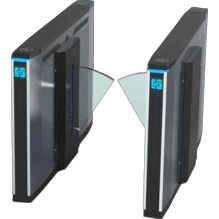 Flaptile R180
 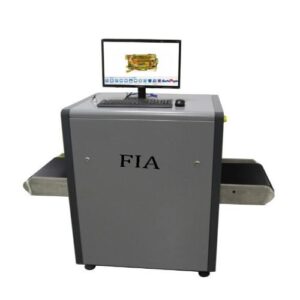 X-Ray Baggage Scanner 5030