
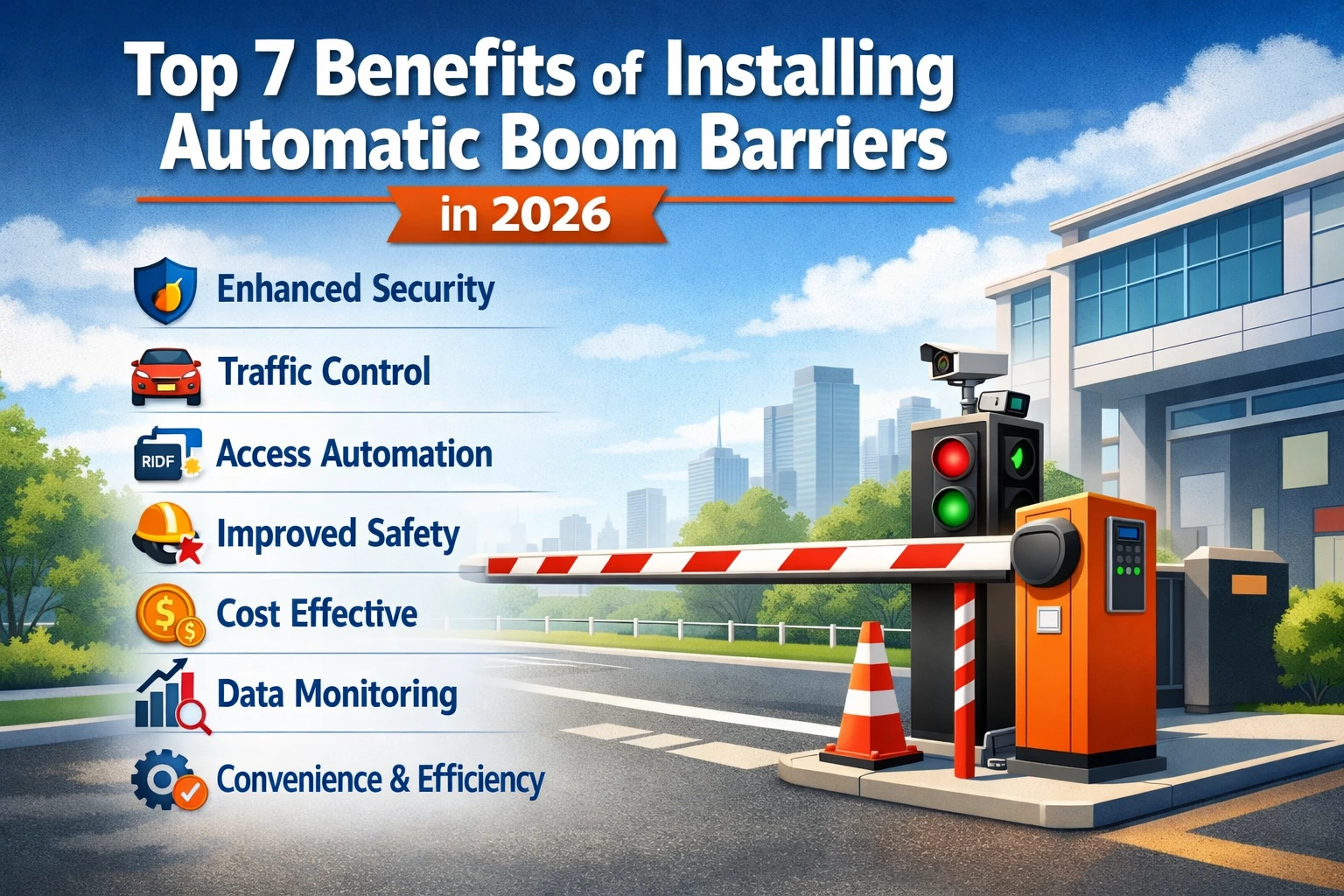
Managing vehicle access has become one of the most pressing operational challenges for businesses, residential societies, and public institutions alike. As urbanisation accelerates and security concerns grow more sophisticated, the demand for smarter entry control systems is rising sharply. Automatic boom barriers have emerged as one of the most reliable, cost-effective, and scalable solutions available today.
Whether you manage a corporate campus, a housing complex, a toll plaza, or a hospital, here is why investing in an automatic boom barrier in 2026 is one of the smartest infrastructure decisions you can make.
1. Enhanced Security Without the Overhead
The most obvious advantage of installing an automatic boom barrier is the immediate uplift in security. Unlike manual gates or security personnel alone, a boom barrier creates a physical checkpoint that cannot be bypassed without deliberate force. When integrated with RFID cards, licence plate recognition cameras, or access control software, it ensures that only authorised vehicles enter restricted zones.
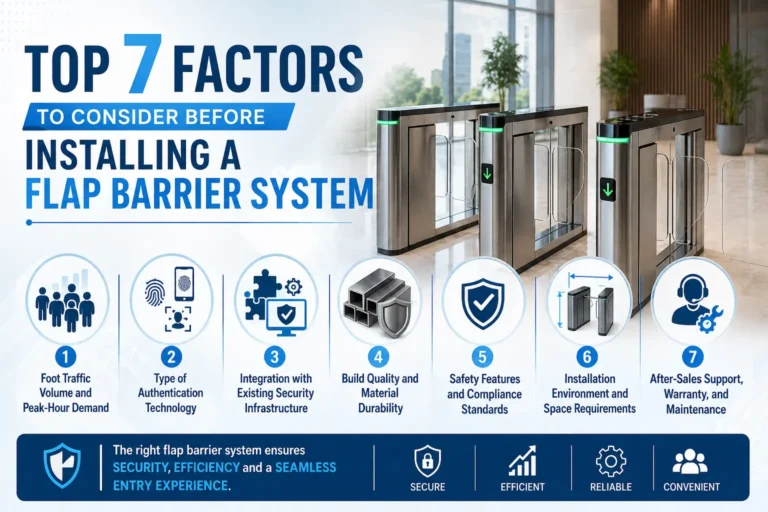
For pedestrian entry points within the same facility, many organisations pair their vehicle barriers with a Flap Barrier — creating a unified, end-to-end access control perimeter that covers both vehicles and foot traffic seamlessly.
In 2026, with hybrid work models bringing variable foot and vehicle traffic to office premises, having a consistent, tamper-resistant entry system removes a significant vulnerability. No shift handovers, no distracted guards — the barrier is always alert.
2. Smooth Traffic Flow and Reduced Congestion
Manual vehicle management creates bottlenecks, especially during peak hours. A guard waving cars through or verifying passes one by one simply cannot match the throughput of an automated system. Modern boom barriers open and close in under two seconds, keeping queues short and traffic moving efficiently.
For high-volume locations such as shopping malls, hospitals, airports, and large residential gated communities, this speed translates directly into a better experience for everyone — visitors, residents, staff, and delivery personnel included. Eliminating congestion at the gate also reduces fuel wastage and vehicle idling time, a small but meaningful environmental win.
3. Significant Long-Term Cost Savings
There is an upfront investment involved in purchasing and installing a boom barrier system, but the return on that investment becomes visible relatively quickly. Consider what a 24/7 manned checkpoint actually costs — salaries, allowances, shift supervision, training, and the inevitable human errors that come with fatigue.
An automatic boom barrier handles all of this autonomously. Maintenance requirements are minimal, especially for quality systems with brushless motors and weather-resistant housings. Over a three-to-five-year horizon, the operational savings consistently outweigh the initial expenditure, making it a financially sound decision for facility managers working within budget constraints.
4. Seamless Integration with Modern Smart Systems
One of the most compelling reasons businesses are upgrading to automatic boom barriers in 2026 is their compatibility with broader smart building and smart city ecosystems. These systems can be connected to parking management software, visitor management platforms, surveillance cameras, intercom units, and even mobile apps that allow remote gate control.
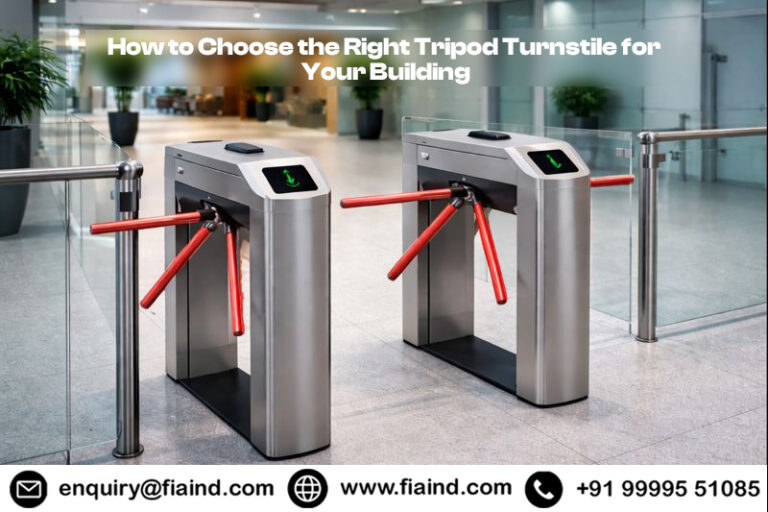
Imagine a facility manager opening the gate for an authorised vendor from their smartphone while sitting in a meeting — that is the level of convenience modern integrated systems offer. For pedestrian access within the same premises, solutions like the Tripod Turnstile complement boom barriers perfectly, giving security teams complete control over who enters on foot, while the barrier manages vehicle movement. For large enterprises managing multiple sites, centralised monitoring of all access points from a single dashboard has become a practical reality, not just a futuristic concept.
5. Accurate Record-Keeping and Audit Trails
Every vehicle that passes through an automatic boom barrier can be logged automatically — timestamp, vehicle identification, access credential used, and duration of stay. This data is invaluable for a range of purposes: security audits, billing in paid parking facilities, compliance documentation, and incident investigation.
Manual logs, by contrast, are prone to gaps, illegible entries, and deliberate omissions. Digital records from an automated system are consistent, searchable, and difficult to manipulate. For organisations operating in regulated industries or those subject to safety audits, this kind of reliable audit trail is not just convenient — it is often a compliance requirement.
6. Durability and Reliable Performance in All Conditions
Quality automatic boom barriers are engineered to operate reliably across a wide range of environmental conditions — extreme heat, dust, heavy rain, and high-humidity environments. For a country like India, where infrastructure must withstand both scorching summers and intense monsoon seasons, this resilience is particularly important.
Leading barrier systems come with IP54 or higher ingress protection ratings, UV-resistant enclosures, and motors designed for high-cycle operation — often rated for hundreds of thousands of open-close cycles before servicing is needed. In critical infrastructure like toll booths or hospital access points, where downtime is simply not acceptable, this level of durability provides genuine peace of mind.
7. Customisable to Any Application or Scale
No two facilities are identical, and automatic boom barriers are available in configurations that suit virtually every use case. Boom lengths typically range from 1 metre to over 6 metres, covering everything from a single-lane residential driveway to a wide industrial gate. Speed settings, barrier arm styles (straight, folding, or with skirts), and integration options can all be tailored to the specific operational requirements of your site.
For facilities that also need to manage pedestrian lanes alongside vehicle entry, combining a boom barrier with a Flap Barrier or a Tripod Turnstile creates a comprehensive, layered security setup that is both scalable and cost-effective. Modern barrier systems are designed with future expansion in mind, so you are never locked into a costly replacement when your needs evolve.
Making the Right Choice in 2026
The security and access control landscape has matured considerably. Decision-makers today are not simply choosing between a guard and a gate — they are evaluating entire ecosystems of integrated, data-driven infrastructure. Automatic boom barriers sit at the intersection of physical security, operational efficiency, and digital management.
Whether you are a facilities manager looking to reduce overheads, a developer planning a new gated community, or a logistics operator managing a busy warehouse compound, the case for installing a quality automatic boom barrier has never been stronger.
At eTradeFia, we supply a curated range of automatic boom barriers suited to commercial, residential, and industrial applications — backed by technical support and installation guidance. If you are evaluating options for your facility, explore our full range of pedestrian access solutions including Flap Barriers and Tripod Turnstiles, or get in touch with our team for a personalised recommendation.
 Flaptile R180
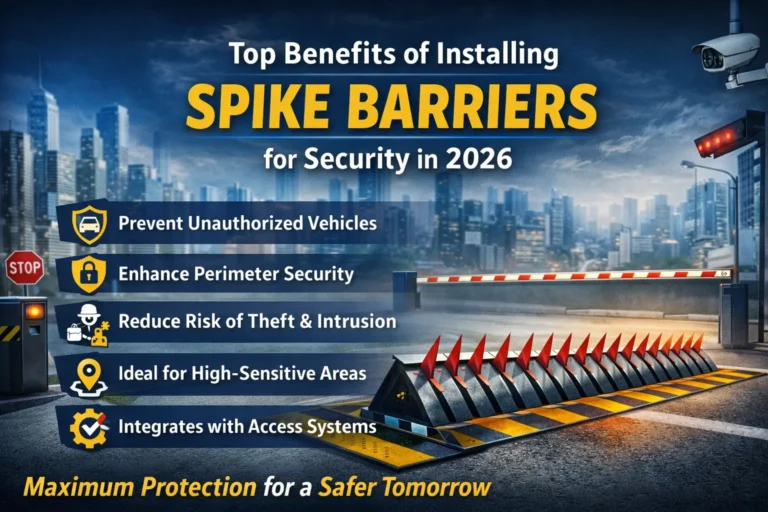
 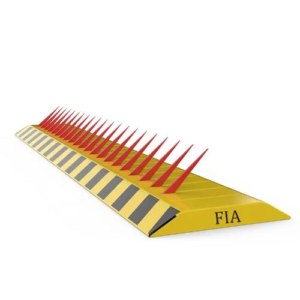 Spike Barrier 400H
 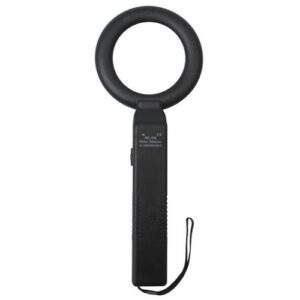 HHMD 50