
Introduction
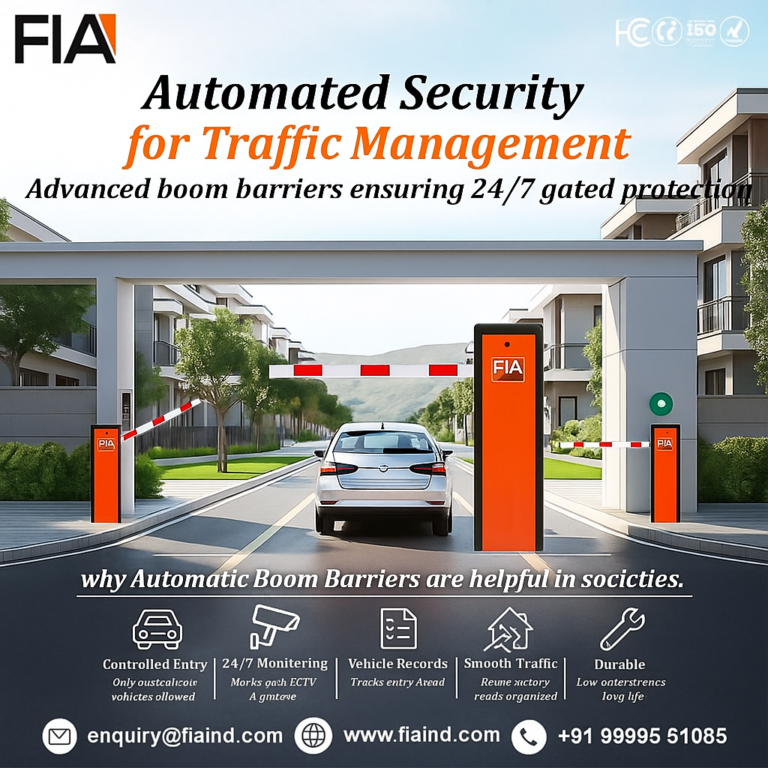
Whether you’re managing a commercial parking lot, a residential gated community, a toll plaza, or a high-security industrial facility, choosing the right boom barrier is one of the most consequential infrastructure decisions you’ll make. A poorly chosen barrier gate can lead to frequent breakdowns, security vulnerabilities, vehicle damage, and costly replacements within just a few years.
The global boom barrier market is growing rapidly, driven by urbanization, rising security concerns, and the surge in smart infrastructure projects. With hundreds of models—automatic boom barriers, hydraulic barriers, RFID-integrated barrier gates, and solar-powered boom barriers—available today, buyers often find themselves overwhelmed.
This guide distills the decision into 10 critical features every buyer should evaluate before investing. These insights come from real-world installation scenarios, operator feedback, and a deep understanding of how access control systems perform over time.
Also exploring pedestrian access control? If your facility requires managing foot traffic alongside vehicles, you may also want to compare a tripod turnstile or a flap barrier as complementary solutions to your boom barrier setup. For sites with high-security perimeter requirements, a hydraulic bollard offers an additional layer of anti-ram protection worth considering.
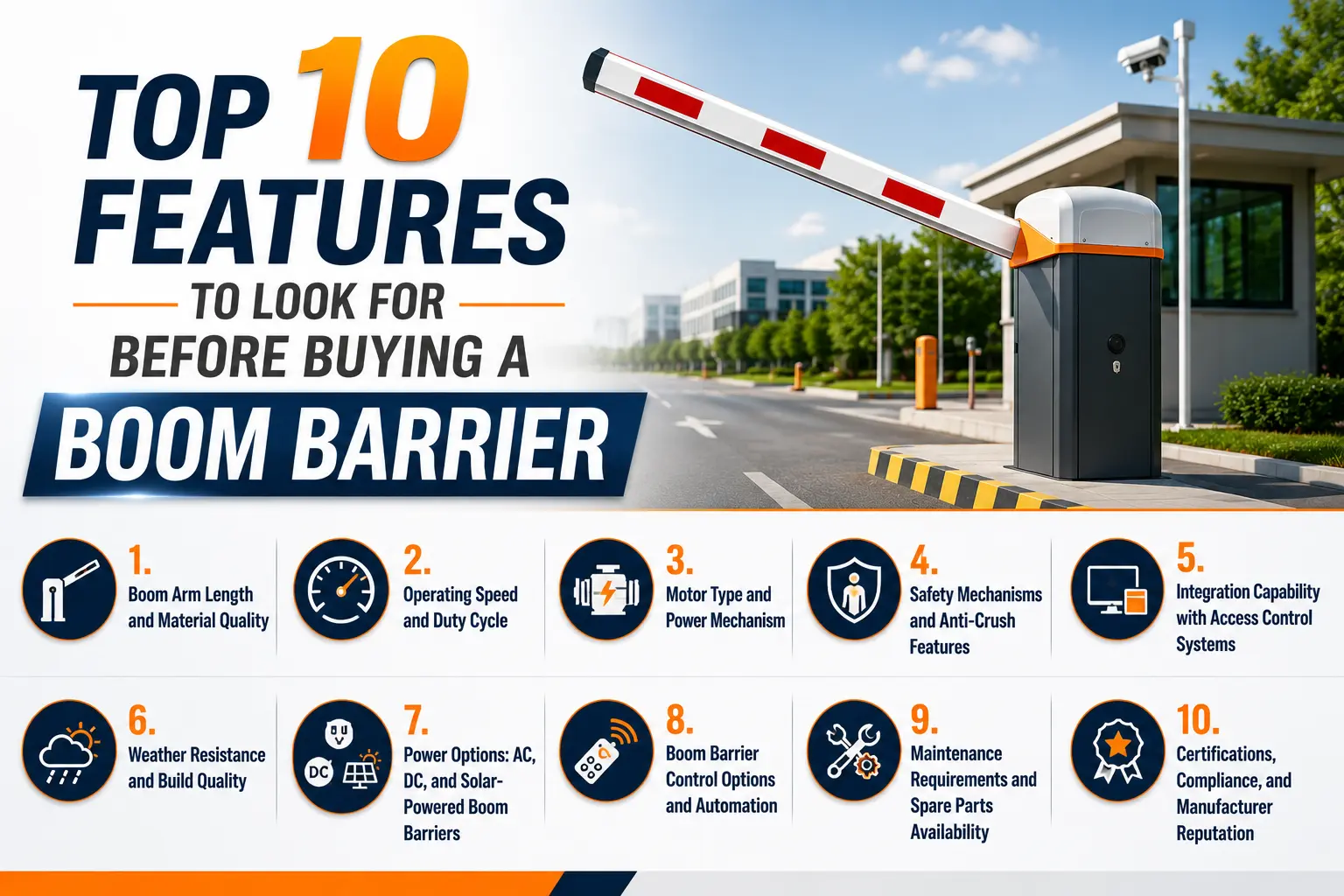
1. Boom Arm Length and Material Quality
The first thing to assess is the boom arm itself—its length, material, and structural integrity under repeated use.
Boom arms typically range from 2 metres to 10 metres in length. Longer arms are needed for wide driveways or multi-lane entry points. However, length must be balanced with the motor’s torque capacity; an underpowered motor paired with a long arm will wear out quickly.
What to look for:
- Arms made from high-grade aluminium offer the best balance of strength and lightweight operation.
- Look for round or octagonal profiles, which are more aerodynamically stable in wind-prone areas than flat arms.
- Counterweighted arms reduce motor strain and extend operational lifespan significantly.
- Some models offer folding or articulating boom arms for low-clearance areas—a practical choice for multi-storey car parks.
Poor arm quality leads to sagging, bending, and imbalance—problems that cascade into motor failure and increased maintenance costs.
2. Operating Speed and Duty Cycle
Speed matters—but so does sustainability. In high-traffic environments like toll booths, airport entries, or busy commercial complexes, a barrier that takes 6–8 seconds to open becomes a bottleneck. Look for models with an opening time of 1.5 to 3 seconds for high-frequency applications.
Equally important is the duty cycle—the percentage of time a barrier can operate without overheating or requiring rest. A barrier rated for:
- 40% duty cycle suits occasional-use residential gates
- 80–100% duty cycle is essential for toll plazas or 24/7 commercial access points
Never compromise on duty cycle for the sake of upfront cost. An undersized motor on a busy gate is one of the most common causes of premature failure in boom barriers.
3. Motor Type and Power Mechanism
The heart of any automatic gate barrier is its motor. There are two primary types used in modern boom barriers:
Electromechanical Motors
- Reliable and widely used
- Easier to maintain and repair
- Suitable for most commercial and residential applications
Hydraulic Motors
- Deliver significantly higher torque
- Better suited for heavy-duty boom barriers in industrial and high-security zones
- More resistant to vandalism and forced entry
For facilities that need to go beyond access control into active perimeter security—such as government buildings, embassies, or data centres—pairing a hydraulic boom barrier with a hydraulic bollard creates a layered anti-intrusion system capable of stopping even hostile vehicle attacks.
Also consider brushless DC motors, which are increasingly preferred for their energy efficiency, low noise, and longer lifespan compared to traditional brushed motors.
Look for IP54 or higher-rated motor housings—this indicates protection against dust and water ingress, critical for outdoor installations in variable climates.
4. Safety Mechanisms and Anti-Crush Features
A boom barrier operates in environments where pedestrians, cyclists, and vehicles co-exist. Without robust safety systems, a descending boom arm can cause serious injury or vehicle damage.
Essential safety features to verify:
- Obstacle detection sensors (infrared or pressure-sensitive loops) that halt or reverse the arm upon detecting obstruction
- Torque limiting to prevent the motor from forcing the arm down against resistance
- Emergency release or manual override for power failure scenarios
- Safety lights or LED strips on the boom arm to increase visibility at night
In India and across South Asia, where traffic density is high and pedestrian movement near vehicle access points is common, safety-rated boom barriers are not optional—they are a responsibility. For dedicated pedestrian lanes running parallel to vehicle entry points, many facility managers pair their boom barrier with a flap barrier or tripod turnstile to manage foot traffic independently and safely.
5. Integration Capability with Access Control Systems
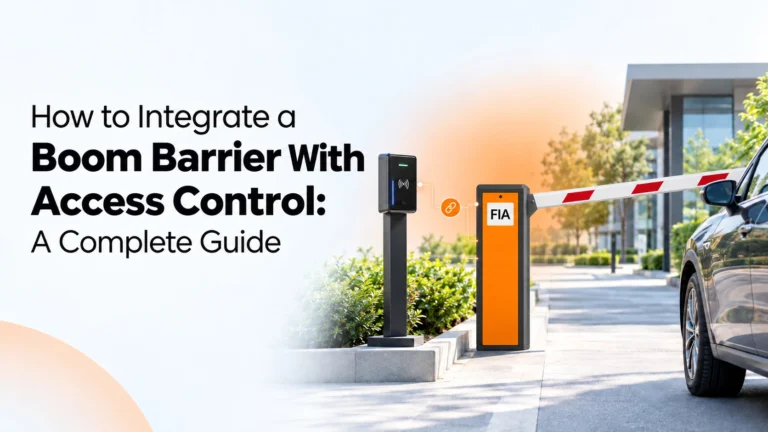
Modern boom barriers rarely function as standalone units. They are part of a larger integrated access control ecosystem. Before purchasing, confirm compatibility with:
- RFID card readers and long-range UHF readers for contactless vehicle identification
- Number plate recognition (ANPR/LPR) cameras for automated entry based on vehicle registration
- Intercom and video surveillance systems
- Boom barrier software and management platforms that log entry/exit timestamps
- QR code and mobile app-based access
A barrier that cannot integrate with your existing infrastructure will require expensive workarounds. Always ask vendors for a compatibility matrix or request a system demo before purchase. If your access control plan spans both vehicle and pedestrian entry, consider how your boom barrier will co-operate with a tripod turnstile or flap barrier on the same controller network—seamless integration across barrier types is a hallmark of a well-engineered facility.
6. Weather Resistance and Build Quality
Boom barriers are exposed to sun, rain, humidity, dust, and in some regions, freezing temperatures year-round. Build quality directly determines how long the unit performs reliably without intervention.
Key quality indicators:
- Housing material: Heavy-gauge steel or powder-coated aluminium resists corrosion
- IP rating of the control box: IP54 minimum; IP65 or higher for tropical or coastal climates
- Anti-UV coating on plastic components to prevent brittleness
- Sealed cable entry points to prevent moisture ingress
For Indian conditions—where monsoon rainfall is intense and summer temperatures often exceed 45°C—investing in a weather-hardened parking barrier gate pays dividends over a 5–7 year lifecycle.
7. Power Options: AC, DC, and Solar-Powered Boom Barriers
Traditional boom barriers run on AC mains supply. But as energy costs rise and infrastructure extends to areas with unreliable grid access, solar-powered boom barriers and battery-backed DC systems are gaining prominence.
What to consider:
- AC-powered barriers are standard and cost-effective where grid supply is stable
- DC motor barriers with battery backup ensure continuous operation during power cuts—crucial for hospitals, data centres, and emergency access gates
- Solar boom barriers are ideal for remote locations, highways, or eco-sensitive projects seeking to reduce carbon footprint
Regardless of power source, ensure the barrier includes a low-power standby mode to reduce energy consumption during off-peak hours.
8. Boom Barrier Control Options and Automation
How users interact with the barrier is as important as how the barrier itself performs. Modern boom barrier systems support multiple control modalities:
- Remote control handsets for simple manual operation
- Push-button panels for security guard stations
- Automatic vehicle detection loops embedded in the road surface
- Mobile app control via Bluetooth or Wi-Fi
- Centralized dashboard control for multi-gate facilities
The more control options a barrier supports, the more flexibly it can be deployed. Look for systems that allow multiple simultaneous control inputs—so a vehicle loop can trigger opening while a guard can also override from a control panel.
9. Maintenance Requirements and Spare Parts Availability
A boom barrier with great upfront specifications but poor serviceability can become a costly liability. Before purchasing, investigate:
- Mean time between failures (MTBF)—a key reliability metric
- Availability of local service technicians certified for the brand
- Spare parts availability in your region—imported brands may have long lead times for components
- Self-diagnostic capability—barriers that can flag errors via LED codes or remote alerts reduce downtime
- Lubrication and inspection intervals—simpler mechanisms require less frequent maintenance
Reputable suppliers offer Annual Maintenance Contracts (AMCs) that cover scheduled servicing, emergency callouts, and parts replacement. Factor this into your total cost of ownership calculation.
10. Certifications, Compliance, and Manufacturer Reputation
Finally, never overlook the credentials behind the product. A certified boom barrier is one that has been rigorously tested for performance, safety, and electromagnetic compatibility.
Look for:
- CE Certification (for European-standard products)
- ISO 9001 for quality management systems
- BIS certification where applicable for Indian market compliance
- Compliance with EN 13241 (the European standard for industrial, commercial, and garage doors and gates, including barriers)
Beyond certifications, research the manufacturer’s track record. How long have they been in the access control industry? Do they have documented installations in environments similar to yours? Do they offer on-site surveys and custom engineering support?
Buying from a manufacturer with deep domain expertise—especially one that understands local traffic patterns, climate conditions, and regulatory requirements—gives you a significant advantage.
Bonus Consideration: Total Cost of Ownership (TCO)
Purchase price is just one element of the financial equation. A quality automatic boom barrier from a reputable supplier may cost more upfront but will deliver:
- Fewer unplanned breakdowns
- Lower energy consumption
- Longer arm and motor lifespan
- Reduced need for replacement parts
Always calculate TCO over a 5-year horizon before comparing quotes. A barrier that costs 20% more upfront but eliminates two major repair events pays for itself.
Quick Comparison: Boom Barrier Types at a Glance
| Feature | Light-Duty | Medium-Duty | Heavy-Duty |
|---|---|---|---|
| Duty Cycle | Up to 40% | 40–80% | 80–100% |
| Ideal Use | Residential | Commercial | Industrial / Toll |
| Arm Length | 2–4 m | 3–6 m | 4–10 m |
| Motor Type | Electromechanical | Electromechanical | Hydraulic / High-torque |
| Integration | Basic | RFID / ANPR | Full access control |
Conclusion
Selecting the right boom barrier requires moving beyond surface-level specifications. By evaluating arm quality, motor capacity, safety features, integration capability, weather resistance, power options, control flexibility, maintenance demands, and certifications, you ensure that your investment delivers reliable, long-term value.
At etradefia, we offer a curated range of boom barriers—from compact residential models to heavy-duty industrial barrier gates—backed by expert technical support and post-sale service. Whether you need a basic parking lot boom barrier or a fully integrated RFID boom gate system for a large facility, our team can help you identify the right solution for your specific requirements.
Looking to build a complete access control ecosystem? Explore our full range of solutions:
- 👣 Tripod Turnstile — Ideal for pedestrian access management at offices, metro stations, and stadiums
- 🚪 Flap Barrier — Sleek, high-speed pedestrian lanes for corporate lobbies and transit hubs
- 🛡️ Hydraulic Bollard — High-security perimeter protection against unauthorized vehicle entry

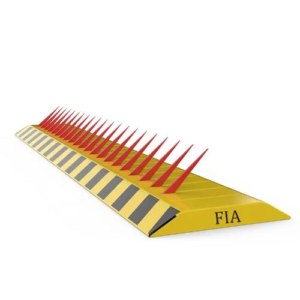 Spike Barrier 400H