What Is an X-Ray Baggage Scanner?
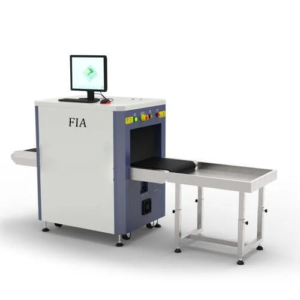
An x-ray baggage scanner is a security screening device that uses ionising radiation to produce detailed images of the contents inside bags, parcels, and luggage — without physically opening them. A conveyor belt moves items through a shielded tunnel where an x-ray beam penetrates the object. Detectors on the opposite side capture the transmitted energy and generate a real-time greyscale or colour-coded image on a monitor for an operator to review.
Modern x ray scanner technology has come a long way from basic greyscale imaging. Today's systems use dual-energy detection to differentiate between organic materials (such as food, paper, or explosives), inorganic compounds (metals, ceramics), and mixed materials — each rendered in a distinct colour on screen. This makes it far easier for operators to identify potential threats quickly and accurately.
How a Baggage Scanner Machine Works
Understanding the mechanics of a baggage scanner machine helps organisations choose the right specification for their environment. Here is a simplified breakdown of the process:
- An item is placed on the conveyor and fed into the scanning tunnel.
- An x-ray tube emits a fan-shaped beam of radiation across the width of the tunnel.
- Detectors measure how much radiation passes through the object and what is absorbed by different materials.
- The detection data is processed by onboard software and converted into a visual image displayed on the operator's screen.
- Threat-detection algorithms highlight suspicious shapes, densities, or material signatures automatically.
- If required, the item is flagged for secondary inspection or physical search.
Advanced baggage x-ray machines can complete this entire process within seconds, keeping throughput high while maintaining rigorous security standards.
Types of X-Ray Baggage Scanners We Supply
1. Compact Bag Scanners
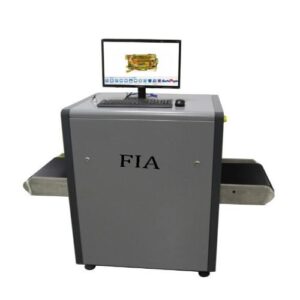
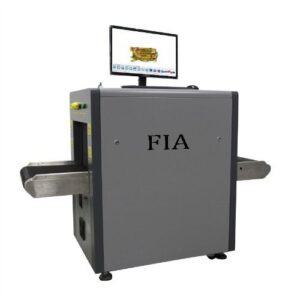
Ideal for smaller premises such as corporate offices, courthouses, and event venues, compact bag scanners offer a smaller tunnel aperture (typically 400 mm × 300 mm) and a lower conveyor speed. They are designed for moderate traffic and are straightforward to operate, making them suitable for trained but non-specialist security personnel.
2. Standard Airport Baggage Scanners
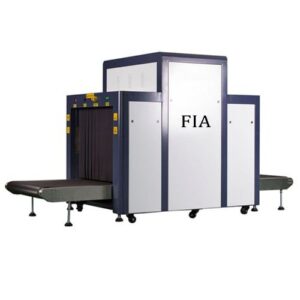
The airport baggage scanner is purpose-built for high-throughput environments. These machines feature larger apertures (often 620 mm × 420 mm or wider), higher conveyor speeds, and robust dual-energy imaging. An airport scanning machine must meet stringent civil aviation authority standards, and our models carry the relevant certifications to ensure compliance with international aviation security regulations.
3. High-Throughput X-Ray Scanner Machines
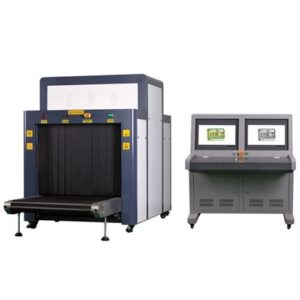
For major international hubs, rail terminals, and large-scale events, high-throughput x ray scanner machines are equipped with faster conveyor belts, multi-view imaging (where multiple x-ray beams scan from different angles simultaneously), and AI-assisted threat detection. These systems reduce operator fatigue and false-alarm rates significantly.
4. Checked Baggage X-Ray Baggage Scanner Machine
Distinct from cabin baggage screening, the x ray baggage scanner machine used for checked luggage is typically much larger, designed to handle suitcases and oversized items. These units are often integrated into automated baggage handling systems and may include computed tomography (CT) technology for three-dimensional imaging of suspect items.
|
💡 Did You Know: Dual-energy x-ray baggage scanners can differentiate between organic, inorganic, and mixed materials using colour coding — dramatically improving threat detection accuracy without slowing throughput.
|
Key Features to Look for in a Baggage Scanner
When evaluating a baggage scanner or x-ray scanner for your facility, the following specifications and features should guide your decision:
- Tunnel Size: Match the aperture dimensions to the largest items you expect to screen.
- Image Resolution: Higher line-pair resolution (measured in lp/mm) produces clearer, more detailed images, aiding accurate threat detection.
- Penetration Depth: Steel penetration rating indicates the machine's ability to see through dense objects.
- Dual-Energy Detection: Essential for colour-coded material differentiation — a key feature of any serious x ray baggage scanner machine.
- Conveyor Speed: Must align with your site's throughput requirements without compromising image quality.
- Operator Interface: Intuitive software, zoom and enhancement tools, and image archiving capabilities reduce errors and support audit trails.
- Radiation Safety: Confirm the unit complies with IEC 62463 and relevant national radiation standards for operator and passenger safety.
- Integration Capability: For airports and large venues, consider whether the airport scanning machine can integrate with existing access control, alarm management, or baggage handling systems.
Where X-Ray Baggage Scanners Are Used
The applications for a baggage x-ray machine extend well beyond aviation. Etradefia supplies security scanning solutions across a broad spectrum of sectors:
- Airports and Aviation: Cabin baggage and checked luggage screening, staff access points, and cargo inspection.
- Government and Defence: Parliament buildings, embassies, military installations, and border control checkpoints.
- Corporate and Commercial: Office towers, data centres, banks, and hotels requiring visitor screening.
- Judiciary and Corrections: Courthouses, prisons, and remand centres where contraband prevention is critical.
- Events and Entertainment: Stadiums, concert venues, exhibition halls, and large public gatherings.
- Transport Hubs: Rail stations, metro networks, ferry terminals, and bus depots.
- Education: Universities and schools in high-security environments or regions with elevated risk profiles.
Each environment places different demands on a bag scanner — from the sheer volume of an international airport to the precise threat-detection sensitivity required at a government building. Our team works with clients to specify the right solution for each context.
Why Choose Etradefia for Your Baggage Scanner Machine?
Etradefia is a specialist security equipment supplier with deep experience across civil aviation, government, and commercial security sectors. Here is what sets us apart:
- Certified Equipment: Every x-ray baggage scanner we supply meets or exceeds relevant international standards, including those set by the TSA, ECAC, and regional civil aviation authorities.
- Expert Consultation: Our security specialists help you assess your site, define screening requirements, and select the most appropriate airport baggage scanner or bag scanner for your needs.
- Installation and Integration: We handle end-to-end deployment, from site surveys and installation to software integration and operator training.
- Ongoing Support: Maintenance contracts, remote diagnostics, and rapid spare-parts availability keep your x ray scanner machine operational with minimal downtime.
- Competitive Pricing: We offer transparent, competitive pricing across our entire catalogue of baggage x-ray machines, with flexible procurement options for both public-sector and private clients.
Radiation Safety and Compliance
A common concern among facilities managers is radiation exposure from airport scanning machines. It is worth noting that all regulated x-ray baggage scanner machines produce extremely low levels of ionising radiation — far below any threshold of concern for operators or members of the public passing through screening areas.
Reputable manufacturers design their equipment to comply with IEC 62463 (the international standard for security x-ray equipment), as well as guidelines published by the International Atomic Energy Agency (IAEA). Etradefia only supplies x-ray scanner machines from manufacturers who can demonstrate full compliance documentation, giving you complete confidence in both the safety and legality of your screening operation.
Maintenance and Longevity
A well-maintained baggage scanner machine can reliably serve a facility for ten years or more. Routine maintenance typically includes conveyor belt inspection and replacement, x-ray tube performance checks, software updates, and detector calibration. Etradefia's after-sales team provides scheduled maintenance programmes tailored to the operational tempo of your facility — whether you run a single bag scanner at a corporate reception or a fleet of airport baggage scanners across multiple terminals.
Frequently Asked Questions
Are x-ray baggage scanners safe for food and medication?
Yes. The radiation levels in a standard baggage x-ray machine are far too low to cause any chemical changes in food, medication, or electronic devices. They are considered safe by regulatory authorities globally.
What is the difference between a bag scanner and a walk-through metal detector?
A bag scanner images the contents of baggage using x-ray technology, identifying shapes, materials, and densities. A walk-through metal detector only detects metallic objects on a person's body. Most security checkpoints use both in combination.
Can an x-ray scanner machine detect drugs and explosives?
Yes. Modern dual-energy x ray scanner machines can identify the material signatures associated with narcotics, explosives, and other prohibited substances based on their atomic number and density, in addition to shape recognition.
Do I need a licence to operate a baggage scanner machine?
Regulations vary by country. In many jurisdictions, the use of ionising radiation equipment requires registration with a national regulatory authority, and operators may need formal training certification. Etradefia can advise on the compliance requirements applicable to your location.
|
📞 Get in Touch: Ready to find the right x-ray baggage scanner for your facility? Contact the Etradefia team today for expert advice, product specifications, and a tailored quotation. Our security specialists are available to guide you through every stage of procurement.
|

 TRIO BS
  Sliding Gate Motor 300
  Automatic Hydraulic Bollard 168
  TRIO 20
  Flaptile R180