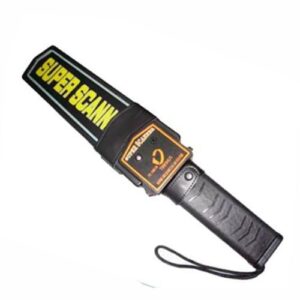
HHMD 200
Original price was: ₹2,500.₹2,275Current price is: ₹2,275.Model: HAM200
Serial No: 760200
Product Code: 50HM20FA
Simple and convenient operation
Low Battery indication
Damp-proof sensitivity adjusting hole

When it comes to quick, accurate threat detection at entry points, an HHMD — or hand held metal detector — has become an essential tool for security professionals around the world. Whether you’re managing access at a school, airport, courthouse, hotel, or public event, the right HHMD machine can make the difference between a safe environment and a serious security lapse.
At etradefia, we supply a carefully selected range of security metal detectors built to perform under real-world demands. This page covers everything you need to know before choosing the best hand metal detector for your setting.
Showing all 3 results
Model: HAM200
Serial No: 760200
Product Code: 50HM20FA
Simple and convenient operation
Low Battery indication
Damp-proof sensitivity adjusting hole
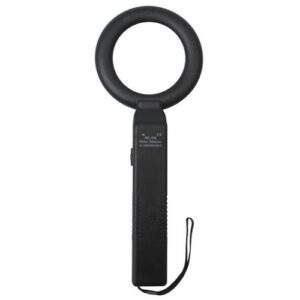
Model: HAM300
Serial No: 760300
Product Code: 50HM20FA
Super high sensitivity
Detect extremely tiny articles
Button adjustment to eliminate Interference
Autotest function for accurate working
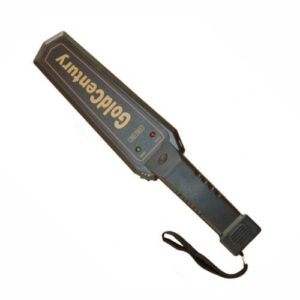
Model: HAM50
Serial No: 760050
Product Code: 50HM20FASimple
Design and Portable
Alkaline Rechargeable Battery
Available with charger and battery
Auto Reset function to change sensitivity
End of content
End of content
HHMD stands for Hand Held Metal Detector. It is a portable, battery-powered scanning device used by security personnel to screen individuals for concealed metallic objects — including weapons, contraband, or unauthorized electronic devices.
Unlike walk-through portals, an HHMD gives the operator precise control over the scan. The device is passed over a person's body at close range, allowing it to pinpoint exactly where a metallic object is located. This makes the hand held metal detector especially useful for secondary screening, crowded entry points, or locations where installing fixed infrastructure isn't practical.
A hand metal detector operates on the principle of electromagnetic induction. The device generates a low-frequency magnetic field through a transmitter coil. When this field encounters a metallic object, it induces eddy currents in the metal, which in turn produce their own magnetic field. The receiver coil detects this change and triggers an alert — typically through a beep, vibration, or LED indicator.
Modern HHMD machines are engineered to distinguish between ferrous metals (like iron and steel), non-ferrous metals (like copper and aluminum), and even stainless steel, which many older detectors used to miss. This broader detection spectrum is what makes today's security metal detectors significantly more reliable than earlier models.
Hand held metal detectors are deployed across a wide variety of environments:
Government and Law Enforcement: Courts, police stations, embassies, and government offices rely on HHMD scanning to maintain secure access. Officers use these devices as a quick, non-invasive method to check visitors entering restricted areas.
Airports and Border Control: While walk-through systems handle bulk passenger flow, security teams use hand metal detectors for targeted re-screening or when someone triggers an alert at the primary checkpoint.
Educational Institutions: Schools and universities increasingly use HHMD machines at entrance points to deter the carrying of weapons on campus. Their portability means they can be moved to different gates as needed.
Events and Venues: Stadiums, concert halls, places of worship, and conference centers often deploy HHMD screening at gates where queues are too narrow or variable for fixed portals.
Hospitals and Healthcare Facilities: Metal detectors help protect sensitive departments and high-risk wards, keeping staff and patients safe.
Industrial Sites: Certain factories and secure production areas use hand held metal detectors to prevent unauthorized materials from entering clean rooms or sensitive zones.
Not all security metal detectors are built equally. When evaluating options, consider the following:
Sensitivity Adjustment: A quality HHMD should allow operators to set sensitivity levels. High sensitivity is needed to detect small items like blades or wires; lower sensitivity settings reduce false alarms from belt buckles or metallic accessories.
Audio, Visual, and Vibration Alerts: The best hand metal detectors offer all three alert modes. Vibration mode is especially valuable in noisy environments where a beep may go unheard, or in situations where a discreet scan is required.
Battery Life and Charge Indicators: Security shifts are long. An HHMD machine that runs reliably for 8–12 hours per charge reduces the risk of a scanner going dead mid-operation. Look for devices with a visible battery indicator.
Ergonomic Design and Weight: Officers may perform hundreds of scans per shift. A lightweight, well-balanced hand held metal detector reduces fatigue and improves scan accuracy over extended use.
Durability: Security environments can be harsh. Drop-resistant housing and weather-sealed components extend the working life of a device considerably.
Detection Cone Shape: Flat, oval detection heads provide a wider sweep per pass, reducing the number of passes needed to screen each person.
Both technologies serve important roles, but they aren't interchangeable. Here's how they compare in practice:
A walk-through portal is ideal for high-volume, continuous traffic — think airport departure halls or large stadium gates. It screens automatically without requiring a trained operator to perform each scan individually.
An HHMD, by contrast, is indispensable when you need precision. Once someone triggers a walk-through alarm, a hand held metal detector allows security staff to isolate exactly where the metallic object is — on which side of the body, and at what height. That localization ability is something fixed portals simply cannot provide.
The two technologies are most effective when used together. Walk-through systems manage flow; the HHMD handles follow-up.
Before selecting a hand metal detector, define your operational requirements clearly:
At etradefia, our product specialists are available to help match the right device to your specific use case.
A poor-quality HHMD creates two problems simultaneously: it misses real threats and triggers unnecessary alarms on harmless items. Both outcomes erode trust — in your team, your process, and your brand.
Investing in a well-engineered hand held metal detector from a reliable supplier isn't just about equipment — it's about operational confidence. When your security team picks up a device and scans someone, they need to know the result is accurate.
etradefia sources HHMD machines from manufacturers with proven track records in defense, aviation, and critical infrastructure security. Every device in our catalog is selected based on detection accuracy, build quality, regulatory compliance, and real-world performance data.
Whether you need a single hand metal detector for a small venue or a fleet of HHMD machines for a large-scale deployment, etradefia has options to match. Explore our full selection below, or contact our team for a tailored recommendation.
etradefia — Security Equipment You Can Rely On.
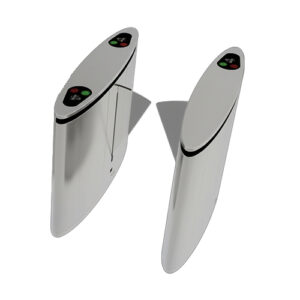 Flaptile R100
1 × ₹285,000
Flaptile R100
1 × ₹285,000 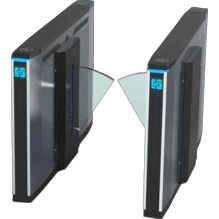 Flaptile R180
1 × ₹345,000
Flaptile R180
1 × ₹345,000 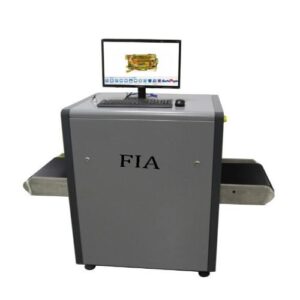 X-Ray Baggage Scanner 5030
1 × ₹902,750
X-Ray Baggage Scanner 5030
1 × ₹902,750 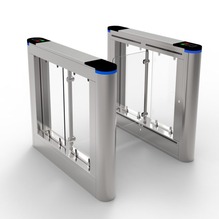 FLIP SW10
1 × ₹265,000
FLIP SW10
1 × ₹265,000 Subtotal: ₹1,797,750