
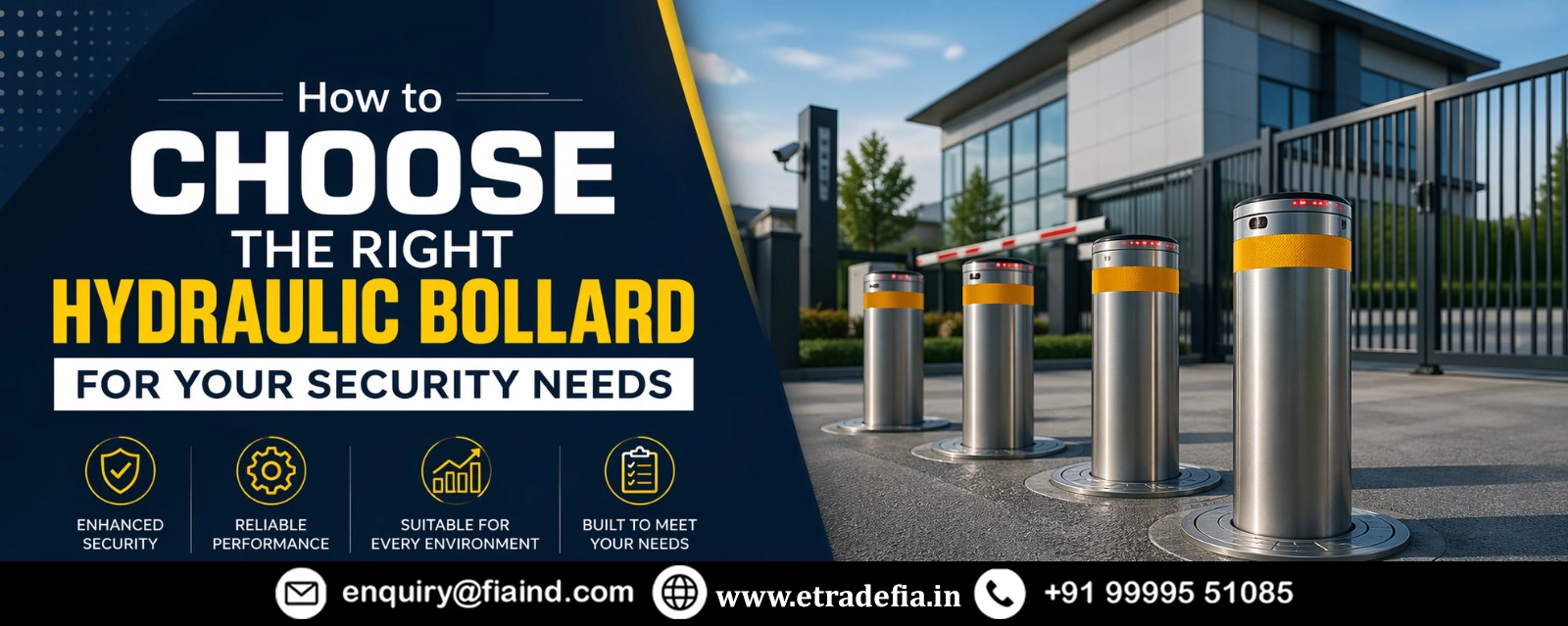
Every minute, vehicle-borne threats put critical infrastructure, public spaces, and commercial facilities at risk. Whether you manage a government building, a stadium, a hospital, or a corporate campus, the question is not whether you need robust perimeter security — it is which hydraulic bollard system will actually deliver the protection you require.
Hydraulic rising bollards are among the most effective and widely deployed vehicle access control solutions in the world. Yet with dozens of models, specifications, and certifications available, selecting the wrong one can be costly — both financially and, more critically, in terms of security gaps. This expert guide, developed from real-world installation experience and industry standards, walks you through exactly what to evaluate before you buy.
What Is a Hydraulic Bollard — and Why Does It Matter?
A hydraulic bollard is a retractable security post that rises from a below-ground housing using fluid-powered hydraulic actuators. Unlike fixed or removable bollards, hydraulic rising bollards offer controlled, automated operation — allowing authorized vehicles to pass while blocking unauthorized ones with immense stopping force.
These systems are the backbone of vehicle access control at airports, embassies, government facilities, data centers, shopping malls, event venues, and critical utility infrastructure. When properly specified and installed, a certified hydraulic bollard can stop a 7,500 kg truck traveling at 80 km/h — preventing potential mass-casualty incidents.
“A bollard is not just a post in the ground. It is a certified, engineered system — and choosing one without matching it to your threat model is the single most expensive mistake in perimeter security.”
The key advantage of hydraulic systems over electric or pneumatic alternatives is their superior crash resistance, operational reliability in extreme weather, and ability to handle high-cycle traffic without mechanical fatigue. For any application where security is non-negotiable, hydraulic is the industry standard of choice.
Step 1 — Define Your Threat Level and Security Classification
Before comparing products, you must define your threat profile. Security planners and bollard manufacturers use internationally recognized standards to classify threat levels. The two most commonly referenced are:
PAS 68 (UK) and IWA 14-1 (International)
IWA 14-1 is the global standard for vehicle security barriers. It classifies bollards by vehicle weight, impact speed, and penetration distance. For example, a bollard rated V/7500[N3]/80/90:0.0 means it can stop a 7,500 kg vehicle at 80 km/h with zero penetration. For most critical infrastructure applications, an IWA 14-1 rating is the minimum benchmark you should accept from any supplier.
ASTM F2656 (North America)
The American standard classifies bollards by K-rating (K4, K8, K12) and M-rating (M30, M40, M50). An M50/P1 rating — stopping a 6,800 kg vehicle at 80 km/h with less than 1 meter of intrusion — is required for most U.S. federal facility perimeters under the Department of State guidelines.
If your site is a public-facing commercial space with moderate risk, a lower IWA 14-1 rating may suffice. If you are securing a military base, embassy, or nuclear facility, you need the highest available crash certification with independent test verification.
Step 2 — Choose the Right Type of Hydraulic Bollard
Not all hydraulic bollards are the same. The type you select must match your operational pattern, traffic volume, and aesthetic requirements.
| Type | Rise Time | Best For | Crash Rating |
|---|---|---|---|
| Standard Hydraulic Bollard | 4–8 sec | Government, corporate campuses | IWA 14-1 / PAS 68 |
| High-Speed Hydraulic Bollard | <1.5 sec | Embassies, military, airports | M50 / K12 |
| Traffic Control Bollard | 3–6 sec | Pedestrian zones, shopping streets | IWA 14-1 (medium) |
| Anti-Terrorist Bollard | 2–4 sec | Stadiums, public events, landmarks | PAS 68 / IWA 14-1 |
| Surface-Mount Hydraulic Bollard | 4–7 sec | Retrofit, limited civil works budget | Moderate |
In-Ground vs. Surface-Mount Hydraulic Bollards
In-ground hydraulic bollards are the gold standard. They require excavation and a reinforced concrete foundation, but deliver the highest crash resistance and the cleanest visual profile. If your site allows civil works, always prefer in-ground installation.
Surface-mount hydraulic bollards are bolted to existing surfaces and require no excavation. They are ideal for retrofit scenarios or heritage sites where digging is restricted — but they generally carry lower impact ratings and should be used with this limitation clearly understood.
Step 3 — Evaluate Operational Cycle Requirements
One of the most overlooked factors when selecting a hydraulic security bollard is daily cycle volume. A bollard at a pedestrian street may operate 50 times per day. A bollard at a busy car park entrance may cycle 800 times per day. Using a low-cycle bollard in a high-traffic environment leads to premature hydraulic pump failure and expensive maintenance.
- Calculate average daily vehicle movements through the access point
- Confirm the bollard’s rated operational cycles per day (typically 50–1,000+)
- Verify the hydraulic power unit (HPU) duty cycle and pump capacity
- Ask about Mean Time Between Failures (MTBF) from the manufacturer
- Ensure the system has an automatic thermal cut-off to prevent overheating in heavy use
For high-traffic applications like airport drop-off zones or multi-tenant commercial buildings, choose bollards rated for 1,000+ cycles per day with a stainless-steel hydraulic cylinder and industrial-grade HPU.
Step 4 — Review Control and Integration Options
A hydraulic bollard is only as effective as its access control integration. Modern hydraulic rising bollard systems support a wide range of control inputs, and your choice here directly affects how secure and convenient your facility will be.
Common Control Systems
Most quality hydraulic bollard systems can be integrated with ANPR (Automatic Number Plate Recognition) cameras, proximity card readers, key switches, remote controls, intercom systems, and SCADA/BMS platforms. For high-security perimeters, dual-factor authentication — such as ANPR plus a PIN pad — is strongly recommended.
Fail-Safe vs. Fail-Secure Operation
This is a critical decision. A fail-safe bollard automatically lowers during a power failure to allow evacuation — essential for emergency access routes. A fail-secure bollard remains raised during power loss — ideal for protecting assets where unauthorized vehicle entry during a power outage poses a greater risk than evacuation delays. Many sites require both modes at different entry points, managed via UPS backup power.
Expert Integration Checklist
- Confirm the control panel supports your existing access control protocol (Wiegand, OSDP, RS-485)
- Verify Ethernet/IP or BACnet compatibility if connecting to a central BMS
- Ensure the system includes a traffic light and audible warning as standard safety outputs
- Check that the controller supports up to 4 bollards on a single HPU for cost efficiency
- Request remote diagnostic capability (GSM/4G modem) for preventive maintenance
Step 5 — Assess Installation Requirements and Civil Works
Even the best hydraulic automatic bollard will fail to perform if the civil installation is inadequate. Installation quality is as important as product quality, and this is where many projects run into problems.
Foundation and Depth Requirements
Standard in-ground hydraulic bollards require an excavation depth of 900 mm to 1,500 mm depending on the model and ground conditions. The housing chamber must be set in reinforced concrete with appropriate drainage provisions to prevent waterlogging of the hydraulic cylinder — a leading cause of seal failure and premature corrosion.
Underground Utility Survey
Before any excavation, conduct a comprehensive utility survey to identify buried services — gas mains, electrical conduits, data cables, and drainage pipes. Striking a utility during bollard installation is both dangerous and extraordinarily expensive. Your installer should provide an approved method statement and risk assessment before work begins.
Always work with a manufacturer-certified installation partner. Uncertified installation can void product warranties and, more critically, invalidate the bollard’s crash certification — meaning your IWA 14-1 or PAS 68 rated bollard may not perform to specification in an actual impact event.
Step 6 — Consider Maintenance, Serviceability, and Lifecycle Cost
A hydraulic bollard system is a long-term capital investment. The purchase price is only part of the total cost of ownership. A low-cost bollard with poor serviceability or frequent hydraulic fluid leaks will cost significantly more over a 10-year lifecycle than a premium system with predictable maintenance intervals.
Look for hydraulic bollards that feature top-access maintenance design — where the hydraulic cylinder, seals, and control board can be accessed and serviced from above without excavating the housing. This single feature can reduce service labor costs by 60% over the life of the system.
Additionally, ensure your supplier offers a preventive maintenance contract with response time SLAs. For mission-critical installations, a 4-hour emergency response commitment is the industry benchmark.
Top Applications for Hydraulic Bollards in 2026
Hydraulic security bollards are being deployed in an increasingly wide range of settings as vehicle-as-a-weapon threats continue to evolve. Here are the most common and growing use cases:
- Government and Embassy Perimeters — highest crash rating, integrated with biometric access, 24/7 monitored
- Airports and Transport Hubs — high-speed bollards at drop-off zones and vehicle checkpoints
- Shopping Malls and Retail Parks — traffic management plus anti-ram protection at pedestrian-facing entrances
- Hospitals and Healthcare Facilities — fail-safe operation for emergency vehicle lanes
- Stadiums and Event Venues — temporary and permanent anti-terrorist bollard configurations
- Data Centers and Utility Infrastructure — perimeter protection for critical national infrastructure (CNI)
- Residential and Luxury Developments — aesthetic-grade bollards with architectural finishes
Key Certifications to Demand from Your Supplier
When evaluating a hydraulic bollard supplier, certifications are not optional. They are your assurance that the product has been independently validated to perform under real-world impact conditions. Always verify the following:
IWA 14-1:2013 — International Vehicle Security Barriers standard (ISO-aligned). PAS 68:2013 — UK specification for vehicle security barriers. ASTM F2656 — American standard for vehicle crash testing. CE Marking — European conformity for machinery safety. ISO 9001 — Quality management certification for the manufacturing process.
Request the original test reports, not just a supplier’s certificate. Reputable manufacturers provide the full ballistic and vehicle impact test documentation from accredited testing facilities such as the Transport Research Laboratory (TRL) in the UK.
Frequently Asked Questions About Hydraulic Bollards
What is the average lifespan of a hydraulic bollard?
With proper preventive maintenance, a quality hydraulic bollard system has an operational lifespan of 15–25 years. The hydraulic cylinder seals typically require replacement every 3–5 years depending on cycle volume and environmental conditions.
Can hydraulic bollards operate in extreme cold or heat?
Yes — premium hydraulic bollard systems use cold-weather hydraulic fluid rated to –40°C and feature thermostatically controlled heater elements in the HPU for reliable winter operation. For hot climates, thermal management in the HPU and UV-resistant stainless steel cylinder coatings are standard on quality systems.
How much does a hydraulic bollard system cost?
A single hydraulic bollard with HPU and basic access control integration typically ranges from $8,000 to $35,000 USD depending on crash rating, cycle speed, and control options. Civil works and installation add 30–60% to the total project cost. Multi-bollard systems on a shared HPU offer significant cost savings per unit.
What is the difference between a hydraulic bollard and an electric bollard?
Electric bollards use electromechanical actuators and are generally more affordable and easier to maintain at low cycle volumes. Hydraulic bollards use fluid pressure to deliver significantly higher crash resistance, faster rise speeds, and greater reliability at high cycle volumes. For certified anti-ram protection, hydraulic is the preferred technology.
Do hydraulic bollards require planning permission?
In most jurisdictions, installation of in-ground hydraulic bollards on public land or within listed/heritage buildings requires planning approval. On private land, planning requirements vary. Always consult your local authority and engage a certified security consultant before procurement to avoid costly delays.
Final Verdict: Your Hydraulic Bollard Selection Framework
Choosing the right hydraulic bollard is a structured decision, not a product catalog browse. When you approach the selection process through the lens of threat assessment, crash certification, operational cycle requirements, control integration, installation quality, and lifecycle cost, the right product becomes clear.
Start with your threat model. Match the IWA 14-1 or ASTM F2656 rating to your risk level. Choose in-ground installation wherever civil works are possible. Specify daily cycle requirements before comparing HPU specifications. Demand independent crash test documentation, not just a supplier claim.
At Etradefia, we supply and install certified hydraulic bollard systems for government, commercial, and critical infrastructure clients across the region. Our team of security engineers provides free site assessments and specification support to ensure your perimeter security solution is right-sized, code-compliant, and built to last.
Get Expert Hydraulic Bollard Advice
Speak with our certified security engineers for a free site assessment and tailored bollard specification — no obligation.
 RFID Proximity card
  Sliding Gate Motor 2400
  Flaptile R100
 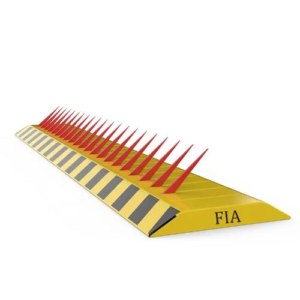 Spike Barrier 400H
 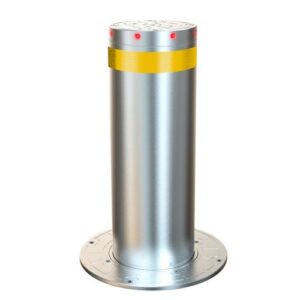 Automatic Hydraulic Bollard 220
  X-Ray Baggage Scanner 8065
 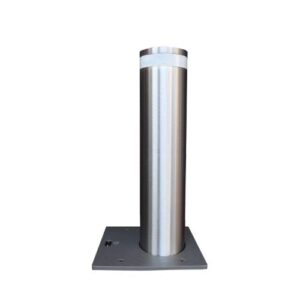 Automatic Hydraulic Bollard 168