Introduction
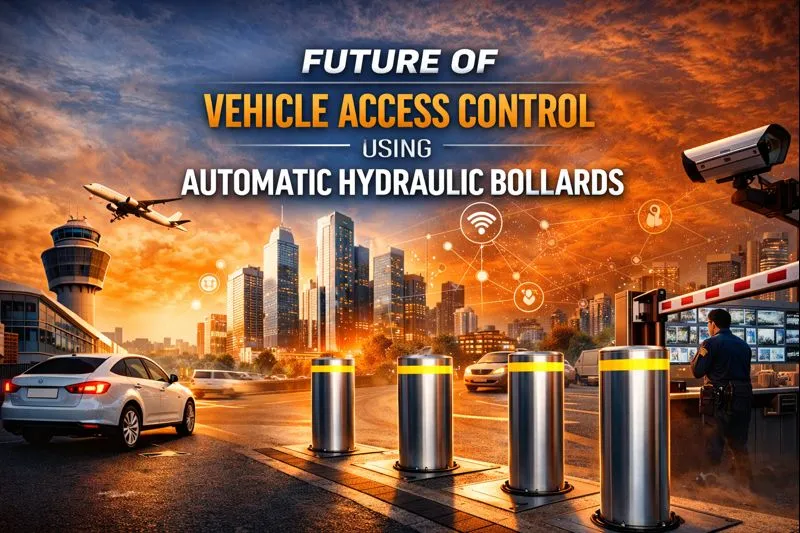
Vehicle access control has become a critical aspect of modern security planning. With rising concerns around unauthorized vehicle entry, ramming attacks, and traffic mismanagement, traditional barriers are no longer sufficient. This is where automatic hydraulic bollards are redefining the future of vehicle access control by offering a perfect balance of security, automation, durability, and smart integration.
As urban infrastructure, commercial complexes, government buildings, and smart cities evolve, automatic hydraulic bollards are emerging as a preferred solution for controlled vehicle movement and perimeter protection.
What Are Automatic Hydraulic Bollards?
Automatic hydraulic bollards are retractable security barriers installed at entry and exit points to regulate vehicle access. Powered by a hydraulic system, these bollards rise and descend smoothly, allowing or restricting vehicle movement based on authorization.
Unlike manual or fixed bollards, hydraulic bollards offer:
- Fast operation
- High impact resistance
- Seamless automation
- Long operational life
These features make them ideal for high-security and high-traffic environments.
Why Vehicle Access Control Is Evolving
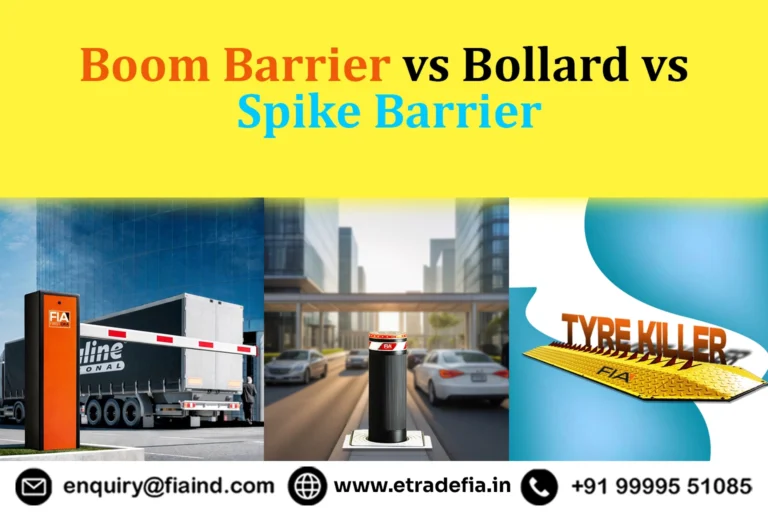
Traditional access control systems like boom barriers and manual gates face limitations in:
- Stopping high-speed vehicle threats
- Operating in extreme weather conditions
- Handling continuous traffic efficiently
The future demands systems that are intelligent, robust, and adaptive. Automatic hydraulic bollards meet these demands by combining mechanical strength with smart control technologies.
Key Reasons Automatic Hydraulic Bollards Represent the Future
1. Enhanced Security Against Vehicle Threats
Automatic hydraulic bollards are designed to withstand heavy vehicle impact, making them highly effective against unauthorized entry and vehicle-based threats. Crash-rated models can stop trucks and heavy vehicles, which is essential for sensitive areas.
2. Smart Automation & Integration
Modern hydraulic bollards can be integrated with:
- RFID systems
- ANPR (Automatic Number Plate Recognition)
- Access cards & biometric systems
- Central security control rooms
This level of integration positions them as a core component of future-ready access control ecosystems.
Role of Automatic Hydraulic Bollards in Smart Cities
Smart cities require intelligent traffic and access solutions that ensure safety without compromising convenience. Automatic hydraulic bollards help by:
- Regulating vehicle access in pedestrian zones
- Enhancing security around public spaces
- Reducing unauthorized traffic in restricted areas
Their ability to connect with centralized systems makes them ideal for data-driven urban management.
Energy Efficiency & Sustainable Design
Future infrastructure emphasizes sustainability. Automatic hydraulic bollards are now being developed with:
- Low power consumption
- Standby energy-saving modes
- Long-life hydraulic components
This makes them suitable for projects aiming for green building compliance and smart infrastructure goals.
Applications Driving Future Demand
Automatic hydraulic bollards are increasingly used in:
- Government buildings & embassies
- Airports & metro stations
- IT parks & corporate campuses
- Commercial complexes & malls
- Hospitals & educational institutions
- High-end residential communities
As security regulations tighten, demand across these sectors will continue to grow.
Reliability in Indian Conditions
One major reason for their growing adoption is their performance in Indian weather conditions. Hydraulic bollards are designed to operate efficiently in:
- Heavy rainfall
- Dust-prone environments
- High temperatures
This reliability ensures minimal downtime and consistent performance, even in demanding environments.
Reduced Human Dependency & Operational Efficiency
Future access control systems aim to reduce manual intervention. Automatic hydraulic bollards:
- Minimize reliance on security personnel
- Reduce human error
- Enable faster vehicle movement
This results in lower operational costs and higher efficiency over time.
Integration with Advanced Security Systems
Automatic hydraulic bollards are no longer standalone products. They now work in sync with:
- CCTV surveillance
- Building management systems (BMS)
- Emergency response systems
Such integration ensures real-time monitoring and rapid response, which is essential for future security planning.
Why Automatic Hydraulic Bollards Are a Long-Term Investment
Though the initial cost may be higher than traditional barriers, automatic hydraulic bollards offer:
- Long service life
- Low maintenance requirements
- Superior security value
This makes them a cost-effective long-term solution for modern vehicle access control needs.
Conclusion
The future of vehicle access control is smart, secure, and automated — and automatic hydraulic bollards sit right at the center of this transformation. With their unmatched strength, intelligent integration, and adaptability to evolving infrastructure needs, they are becoming an essential security solution for the next generation of buildings and cities.
For organizations planning future-ready security infrastructure, investing in automatic hydraulic bollards is no longer an option — it is a necessity.